Apparel
 Auto, Home & Tools
 Bags
 Business & Office Products
 Drinkware
 Food & Candy
 Outdoor & Leisure
 Stationery
 Technology
 Toys & Novelties
 Wellness and Safety
 Writing

 Bookmarks
 Booklets
 Brochures
 Business Cards
 Custom Calendars
 Door Hangers
 Envelopes
 Event Tickets
 Flyers
 Greeting Cards
 Hang Tags
 Invitation Cards
 Labels
 Letterheads
 Magnets
 Menus
 NCR Forms
 Postcards
 Presentation Folders
 Rack Cards
 Sales Sheets
 Stickers
 Trading Cards
 Table Tents

 Banners
 Canvas
 Decals
 Event Tents
 Flags
 Posters
 Reflective Signs
 Signs
 Table Covers
 Tension Fabric Displays
 Trade Show Booths



Dual Raised Printing: How to Pair Two Raised Finishes for a Card People Remember
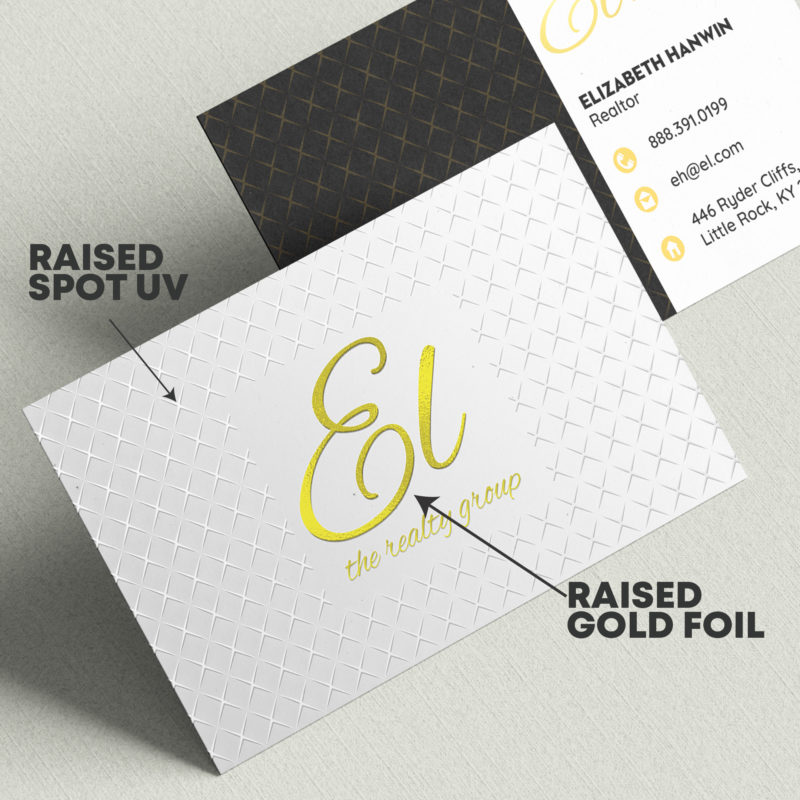
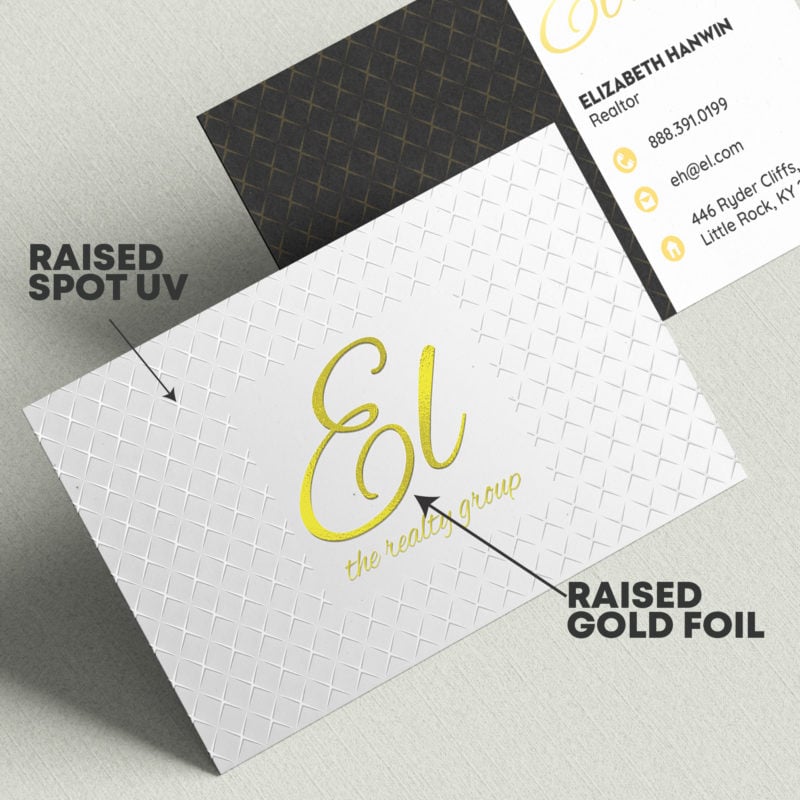
Raised foil makes a card memorable. Two raised finishes make it unforgettable. Dual raised printing places two raised embellishments on the same piece, such as a gold foil logo beside a glossy raised Spot UV pattern, or silver lettering with a holographic accent, so the card has two textures and two kinds of shine. This guide explains how dual raised works, how to pair finishes, how to design for it and how to set up your files.
Key Takeaways
- Dual raised = two raised finishes on the front: two foils, or one foil + raised Spot UV.
- Four combinations: gold + silver; gold or silver + holographic; gold or silver + raised Spot UV; holographic + raised Spot UV.
- Raised foil is about 60 microns high; raised Spot UV about 50 microns.
- The two finishes must sit in separate areas and never overlap.
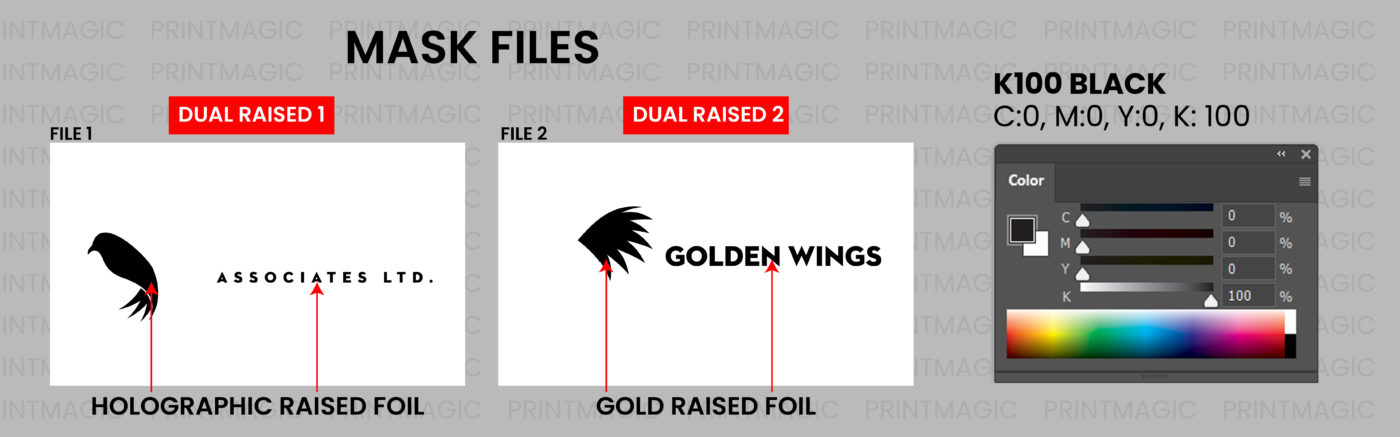
- You’ll need CMYK artwork plus a separate vector mask for each finish.
- Everything prints on 19 pt velvet soft touch (suede) stock.
What Is Dual Raised Printing?
Dual raised printing builds two raised layers into one design. Each finish is placed only where its mask file says, and the two are kept apart, so they read as two distinct elements. On our velvet soft touch (suede) stock, a 1.5 mil laminate on both sides of 16 pt cardstock for a 19 pt finish, the soft background makes both raised textures stand out.
The Four Combinations, and How to Use Them
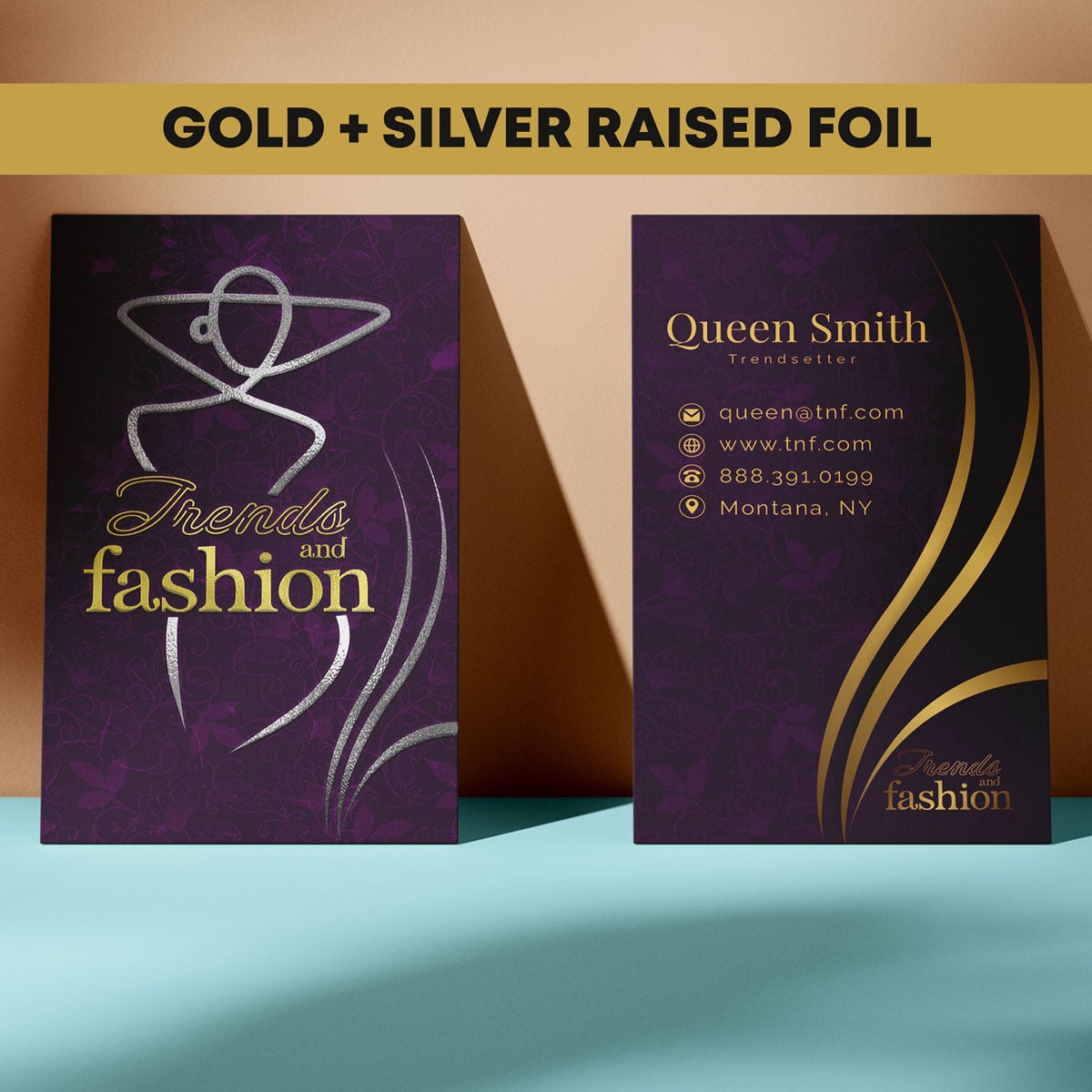
1. Gold + Silver Foil
The two-tone classic. Use gold for the hero (a crest or name) and silver for supporting details (icons, a line, a title), or the reverse. It’s heritage and polish in one card, a favorite for wealth firms, law firms and monogrammed wedding stationery.
2. Gold or Silver + Holographic Foil
Classic metal with a flash of color. Keep the metallic as the main element and use holographic as a small accent: a star, an icon, a line or a single word. The holographic catches light and draws the eye exactly where you want it.
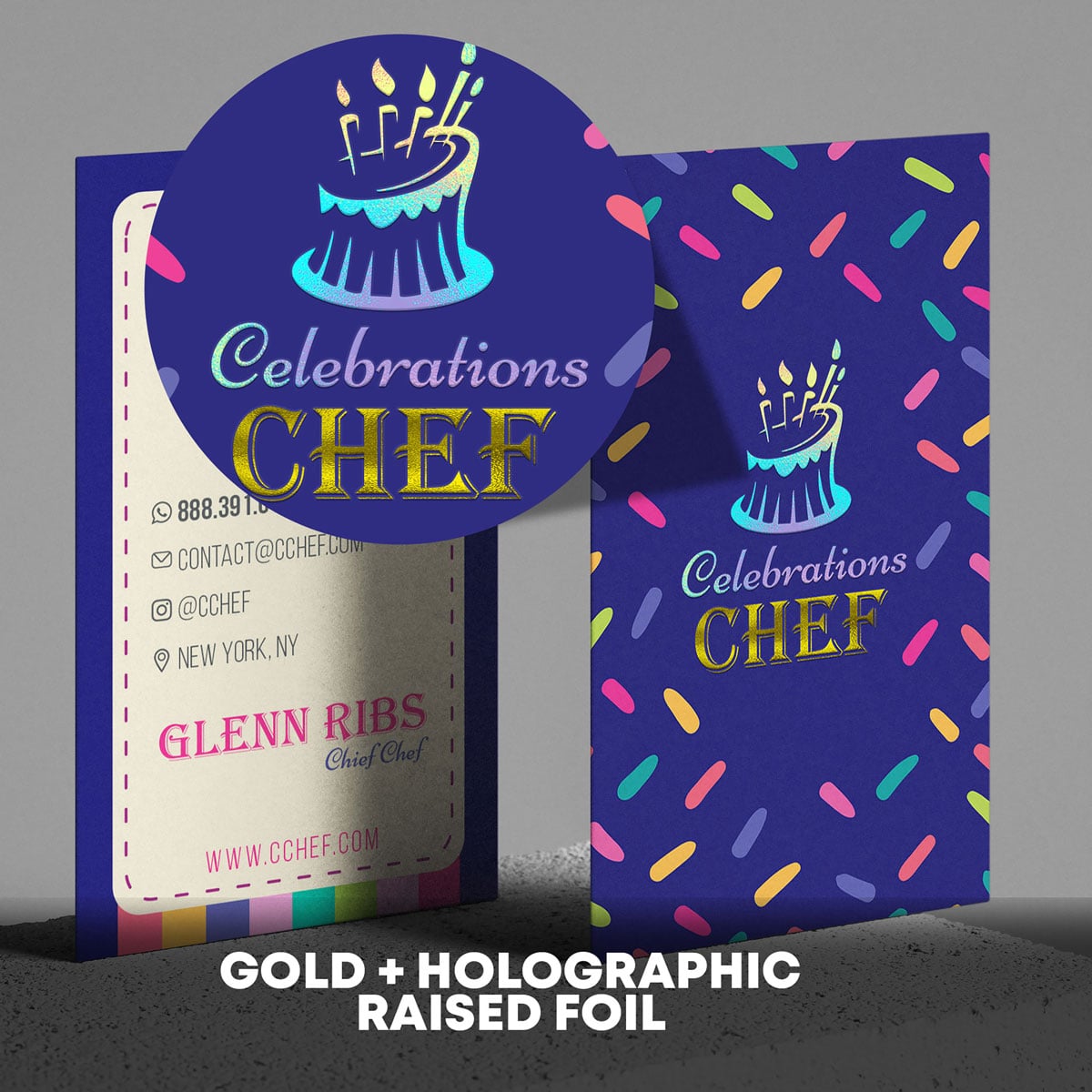
3. Gold or Silver Foil + Raised Spot UV
The most-requested pairing. Foil carries the logo or name; raised Spot UV adds a clear, glossy texture, like a pattern, a monogram repeat, a skyline or lace. It’s subtle in photos and remarkable in hand.
4. Holographic Foil + Raised Spot UV
Bold and modern. A holographic logo with a glossy raised geometric or confetti pattern suits creators, streetwear, beauty brands and nightlife.
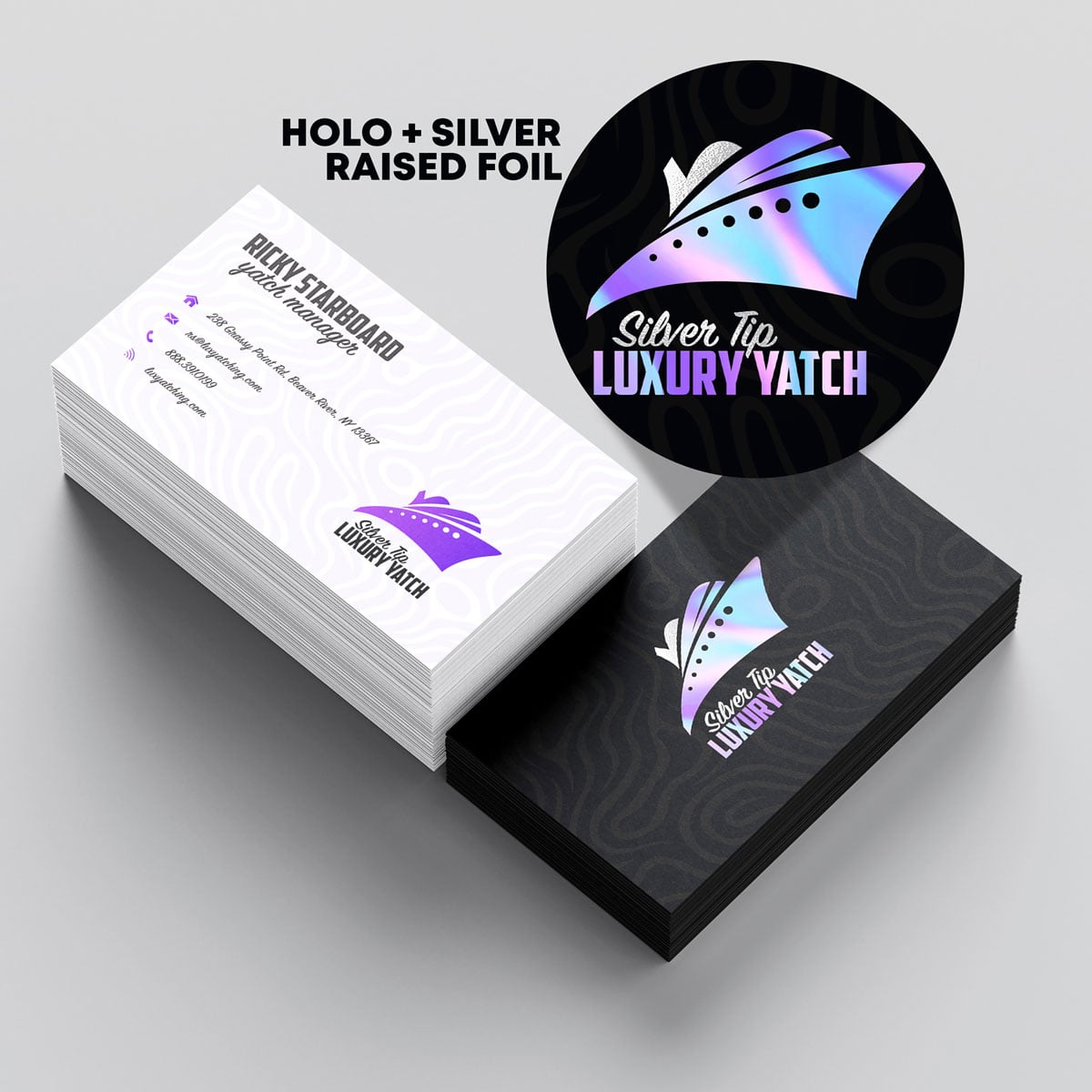
How to Choose the Right Pairing
| If your brand is… | Try |
|---|---|
| Established, traditional, trusted | Gold + silver, or gold + raised Spot UV on navy or black |
| Elegant, romantic | Gold + raised Spot UV lace on ivory or blush |
| Modern, minimal | Silver + raised Spot UV on charcoal or white |
| Creative, playful, bold | Holographic + raised Spot UV, or gold + holographic |
Dual Raised vs. Raised Foil vs. Raised Spot UV
Raised foil gives you one metallic finish you can feel. Raised Spot UV gives you clear, glossy texture. Dual raised combines two of them for the most dimensional result. For a single foil, see our raised foil printing collection; for metallic in any color, see Akuafoil.
Design Rules for Dual Raised
- Separate the finishes. No overlap and no knockouts; registration can shift up to 1/16″, so leave space.
- One hero, one supporting finish. Two equal elements compete; a lead and a support look intentional.
- Mind the coverage: about 30% for foil (up to about 50% for patterns, thin strokes and small shapes), with single foil areas within about 1″ x 1″.
- Size it right: foil text 10 pt+ (12 pt bold), foil lines 1 pt+; raised Spot UV text 9 pt+, lines 0.5 pt+.
- Solid under foil: remove artwork beneath foil areas so it doesn’t show through.
- Contrast wins: deep card colors make metallics glow; raised Spot UV shows best on solid, darker areas.
Common Dual Raised Mistakes
- Overlapping finishes: keep a little space between the two masks.
- Shadows or grayscale in masks: use solid 100% K only.
- Too much of everything: heavy coverage of both finishes looks busy. Let one lead.
- Tiny text in foil: go bolder, or keep it in ink.
Setting Up Dual Raised Files
Send CMYK artwork for each printed side, plus two vector masks for the front, one per raised finish, each with solid 100% K for the raised areas. Name files clearly (e.g., File-Front-Mask-Gold, File-Front-Mask-SpotUV). Full steps are in our file setup guide and Dual Raised FAQs, and our designers can create the masks for you.
Dual Raised Ideas by Product
- Dual Raised Business Cards: a gold logo over a raised Spot UV pattern for a real estate brokerage.
- Dual Raised Invitation Cards: raised gold names framed by raised Spot UV lace, with matching RSVP cards.
- Dual Raised Postcards: a VIP preview mailer with a silver brand mark and a holographic “VIP.”
- Dual Raised Greeting Cards: gold and silver foil ornaments on an executive holiday card.
- Dual Raised Hang Tags: a raised foil logo over a raised Spot UV monogram pattern for a fashion label.
Ready to Pair Your Finishes?
Browse the dual raised printing collection. Need a larger quantity? Request a custom quote. Questions? Chat live, contact us or call (888) 391-0199.
Frequently Asked Questions
What is dual raised printing?
Two raised finishes on one piece, two foils or a foil plus raised Spot UV, in separate areas on the front.
What are the dual raised combinations?
Gold + silver; gold or silver + holographic; gold or silver + raised Spot UV; holographic + raised Spot UV.
Which combination is most popular?
Gold or silver foil + raised Spot UV is the most requested: foil for the logo, glossy texture for a pattern.
How raised are dual raised finishes?
Raised foil is about 60 microns; raised Spot UV about 50 microns.
Can the two finishes overlap?
No. Keep them in separate areas with a little space between them.
How many mask files do I need?
Two vector masks for the front, one per raised finish, plus CMYK artwork for each printed side.
What’s the minimum font size?
10 pt for raised foil (12 pt for bold fonts) and 9 pt for raised Spot UV.
Is dual raised better than raised foil?
It’s more dimensional. Choose raised foil for one standout metallic, and dual raised when you want two textures.
 Signs